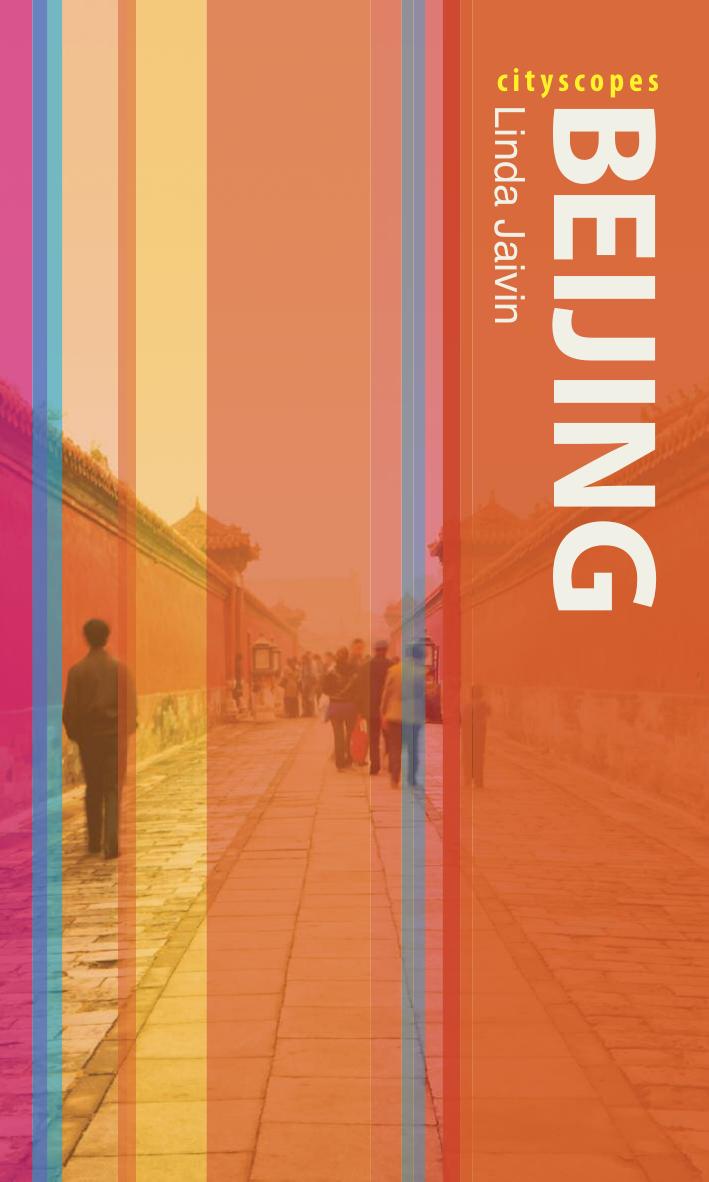
Beijing by Linda Jaivin
Author:Linda Jaivin
Language: eng
Format: epub, pdf
Publisher: Reaktion Books
‘One World, One Dream’, opening ceremony of the 2008 Beijing Olympics at the Bird’s Nest Stadium.
The following year, Beijing staged another spectacle, this one to celebrate the 60th anniversary of the founding of the People’s Republic of China. Security was unprecedentedly heavy, with police and paramilitary troops stationed throughout the centre of the city for days beforehand. Emerging from the subway at Xidan, on my way to see the new propaganda film The Founding of a Republic, I walked straight into the machine-gun sights of a SWAT team ranged before a black armoured vehicle; as I scurried off, every hair on the back of my neck upstanding, I recalled dancing on the square in the celebrations 25 years earlier. On the day itself, with the exception of 30,000 invited guests, Beijing residents were commanded to stay indoors and watch the celebrations on television. If Beijing had ‘come out’, it was on its own terms.
Liu Xiaobo, the former lecturer at Beijing Normal University who’d played a key role in the Tiananmen protests of 1989, remained a leading and bold dissident voice. On Christmas Day, 2009, he was sentenced to eleven years’ imprisonment for ‘inciting subversion of state power’. In 2010, while still imprisoned, he was named Nobel Peace Laureate.
In 2011 the Beijing artist Ai Weiwei was arrested while leaving China on a legitimate passport and held for nearly three months, eventually charged with evading taxes and kept under house arrest. In 2012 his Circle of Animals/Zodiac Heads, a recreation of the circle of bronze zodiac animal heads from the Yuanmingyuan, was unveiled in New York in his absence. While under house arrest, Ai Weiwei made a video of himself and friends doing the Korean rapper Psy’s ‘Gangnam Style’ pony dance, but with handcuffs, and uploaded it to YouTube.
It’s hard to ascertain what most Beijing people know about these two men who have symbolized their city to the world in the second decade of the twenty-first century. Beijing residents born after the Mao era cannot easily access information about the Cultural Revolution, Anti-Rightist Campaign, Great Leap Forward or famine, much less the events of Democracy Wall or the 1989 protests. Not everyone is interested, either. Not since 1949 has a generation enjoyed such access to education, social freedoms, entertainments, travel and employment opportunities. The young people of Beijing today have almost too much with which to occupy themselves – forget Tiananmen Square.
The square itself is heavily policed and no longer open on all sides; fences funnel visitors through guarded underpasses. If a young Beijinger wanders from an exhibition on Bulgari or Louis Vuitton at the swanky new National Museum of China to the adjacent Revolution and History Museum on the east of Tiananmen Square, s/he will see only one photograph illustrating the decade of Cultural Revolution: the caption beneath ambiguously describes the period as a mistake that was manipulated by a ‘counter-revolutionary clique’ in a way that caused terrible suffering. On the worst famine in world history, the museum’s text states: ‘the project of constructing socialism suffered severe complications.
Download
This site does not store any files on its server. We only index and link to content provided by other sites. Please contact the content providers to delete copyright contents if any and email us, we'll remove relevant links or contents immediately.
The Great Music City by Andrea Baker(32609)
Aircraft Design of WWII: A Sketchbook by Lockheed Aircraft Corporation(32333)
Call Me by Your Name by André Aciman(20602)
The Secret History by Donna Tartt(19294)
The Art of Boudoir Photography: How to Create Stunning Photographs of Women by Christa Meola(18688)
Shoot Sexy by Ryan Armbrust(17788)
Plagued by Fire by Paul Hendrickson(17462)
Portrait Mastery in Black & White: Learn the Signature Style of a Legendary Photographer by Tim Kelly(17052)
Adobe Camera Raw For Digital Photographers Only by Rob Sheppard(17031)
Photographically Speaking: A Deeper Look at Creating Stronger Images (Eva Spring's Library) by David duChemin(16735)
Ready Player One by Cline Ernest(14773)
Pimp by Iceberg Slim(14666)
Bombshells: Glamour Girls of a Lifetime by Sullivan Steve(14136)
The Goal (Off-Campus #4) by Elle Kennedy(13780)
Art Nude Photography Explained: How to Photograph and Understand Great Art Nude Images by Simon Walden(13092)
Kathy Andrews Collection by Kathy Andrews(11971)
The Priory of the Orange Tree by Samantha Shannon(9205)
The remains of the day by Kazuo Ishiguro(9083)
Thirteen Reasons Why by Jay Asher(8996)
